
Oak Creek, WI · Garage Door Service
Garage Door Repair for Oak Creek's 1960s and 70s Housing Stock
Oak Creek homes built mostly between 1960 and 1980 carry original torsion hardware that cold winters stress hard. Same-area repair for springs, openers, and tracks.
- Repairs & new doors
- Springs & openers
- Serving 6 nearby communities
Booking a Visit
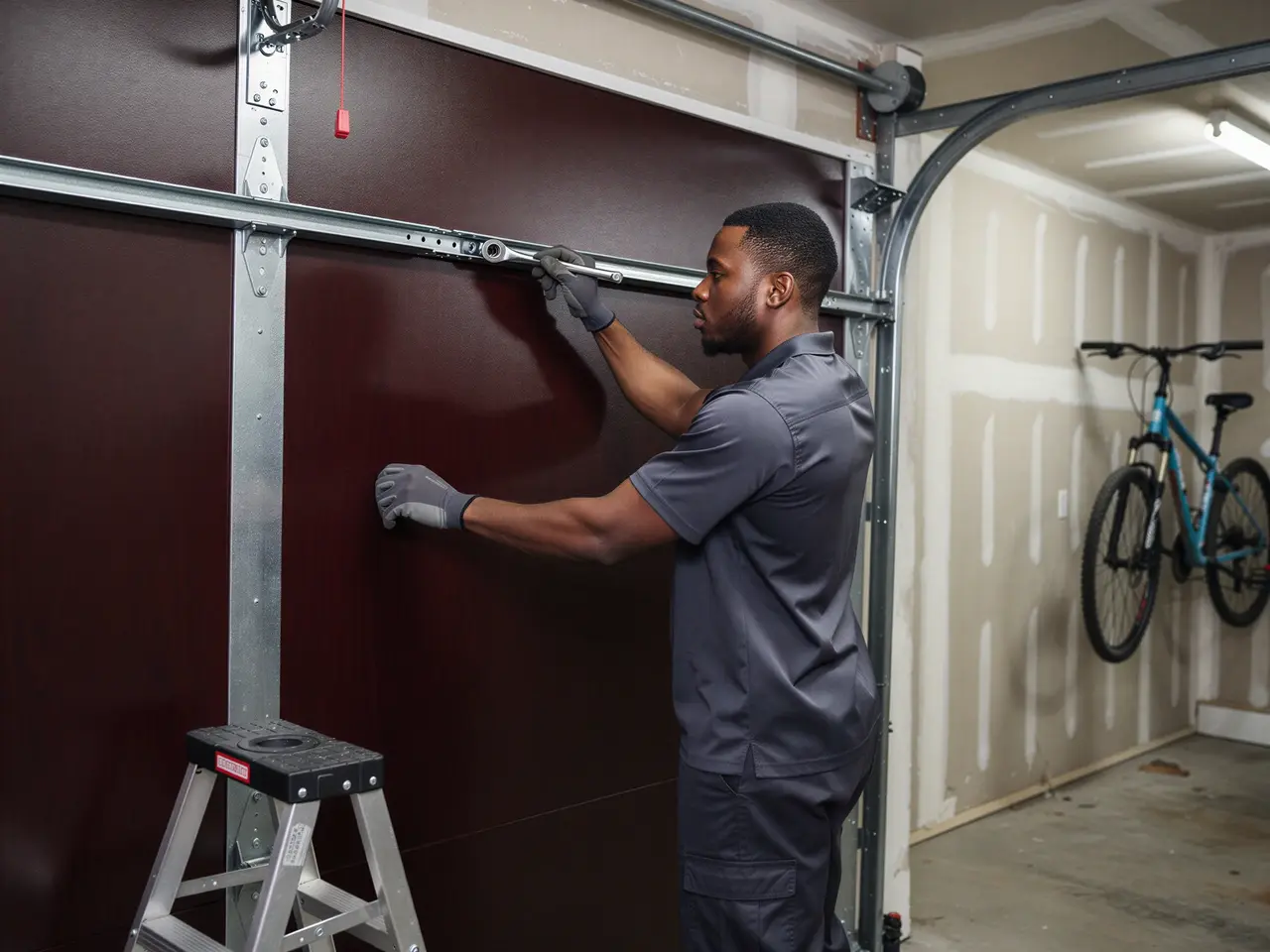
Call and tell us what the door is doing - won't open, won't close, makes a bang, or the opener runs but the door doesn't move. Most of Oak Creek's housing went up between 1938 and 1992, with the bulk of it dating to the 1960s and 70s, so when you give us the rough age of the house we already have a good guess at what hardware is behind the panel before the truck leaves the shop. If you're in one of the surrounding areas - South Milwaukee, Cudahy, Franklin, St. Francis, Greendale, and the rest of the towns within about a twenty-minute drive - we cover those too, but Oak Creek is home base. We don't need the make and model of the door on the phone. We need to know if it's stuck open, stuck shut, or making a noise it didn't used to make, and whether anyone's tried to force it.
Why It Happens Here
A torsion spring is rated for a number of open-close cycles, and in a region with a cold moderate climate band, steel spring wire loses a bit of flex every winter it sits in an unheated garage. Houses built in the median year of 1967 - which describes a lot of Oak Creek - are now on their second or third spring if the first one was ever swapped at all, and plenty haven't been touched since the house was built. That's close to sixty years of thermal cycling on one coil. Add the fact that a big share of these homes carry the original steel panel doors on side-mounted torsion hardware, a setup that's heavier on the springs than the center-mounted torsion bars common in newer construction, and you get a failure mode that's less about bad luck and more about math. Cold snaps don't cause the break so much as they're the day the fatigued spring finally lets go. Openers from the same build era are on borrowed time too - most of that generation used chain drives with steel gears that wear down after decades of use in an unheated space.
What You Are Seeing
A loud bang from the garage, usually when no one's touched the door, is almost always a torsion spring snapping. The door will look fine until you try to lift it and it won't budge, or it drops fast and uneven when you let it down. A door that creeps open a few inches on its own overnight, or one side that hangs lower than the other, points to one spring still holding while its partner has already gone slack or broken. If the opener runs - you hear the motor - but the door doesn't move, check whether the belt or chain has slipped off its track before assuming the motor itself is bad; on 1960s and 70s builds the rail brackets have often loosened over the decades. A door that's noisy but still working, with a grinding or popping sound as it travels, usually means the rollers are original steel and have never been replaced, which checks out given how old a lot of this housing stock is.
Doing It Yourself
You can inspect. You should not try to replace a torsion spring yourself - the spring is wound under enough tension to break a wrist or worse, and that's true no matter how simple it looks with the cover off. What you can safely do: check the tracks for dents or gaps with the door closed, listen for which side the noise is coming from, and test the photo-eye sensors near the floor by waving a hand through the beam. If the door won't close and reverses instead, a dirty or misaligned photo eye is a common, harmless fix - wipe the lenses and make sure they're pointed at each other. Lubricating hinges and rollers with a garage-door-specific lubricant (not WD-40, which attracts grit) is fair game too. Past that - springs, cables, the opener's internal gearing - call it in. We'll be straight with you if a repair isn't worth it on a door old enough that parts are getting hard to source; sometimes replacement is the honest answer.
Frequently asked questions
Why did my garage door spring break in the cold?
Steel loses flexibility as temperatures drop, and in our cold moderate climate band that extra stiffness is enough to finish off a spring that's already fatigued from years of cycling. Houses here built around the 1967 median are commonly on original or long-overdue hardware, so a cold-weather break is often the last straw on a spring that was already near the end of its life.
Is it normal for an opener this old to fail?
Given that a lot of Oak Creek homes date to the 1960s and 70s, yes - chain-drive openers from that era used steel gears that wear down over decades, especially in an unheated garage. If yours has never been replaced, gear wear or a worn drive belt is a common cause of a motor that runs without moving the door.
Do you work outside Oak Creek?
We're based in Oak Creek and cover the surrounding area, including South Milwaukee, Cudahy, Franklin, St. Francis, and Greendale, each within roughly a ten-minute drive. Call and tell us your location and we'll let you know directly if it's in range.
Can I replace a torsion spring myself?
We'd advise against it. A wound torsion spring holds enough stored tension to cause serious injury if it releases wrong, and that risk doesn't change with experience level. Checking tracks, lubricating rollers, and cleaning photo-eye sensors are reasonable DIY tasks; spring and cable work is not.
Related services
Related guides
By Neighborhood
Garage Door Repair across the Oak Creek area
We also handle garage door repair in these Oak Creek-area suburbs.
Book garage door service in Oak Creek
Call now or request a quote - tell us what the door is doing and where you are.